It is unfortunate that a lot of people are not really familiar with the term mammal and use in its place the term animal. Thus to them a cat is an animal, a salmon is a fish, a budgerigar is a bird and a worm is a creepy-crawly. To you and me however these creatures are all of course animals and the cat is that specific type of animal known as a mammal. These other animal poems are poems about all sorts of animals other than mammals and birds both of which enjoy their own separate pages.
Schoolyard Fight
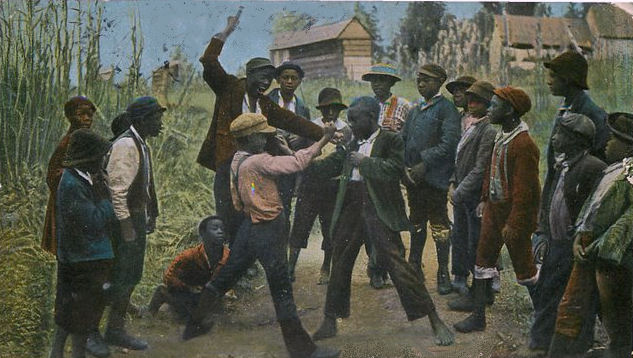
It has rained. The air is moist
And the sun burns in the sky.
Winged ants leave their nests
And soar in mating flights.
The beehives are restless.
The scouts are out and about.
There is the thrumming of a thousand wings.
At any moment the queen could emerge
And the whole swarm rise like Hiroshima.
In the schoolyard there is prickly heat.
Collars stick grimily to the backs of necks.
Teenage boys glisten sweatily.
From every pore leaks musth.
They swagger like bantam cocks
And strut their verbal spurs.
They strain on the leash like pit bulls,
Snarling but half glad to be restrained.
The teachers on patrol can smell it too.
There is an aimless milling around,
A madding crowd of students.
They wisely keep their distance.
This swarm is Africanized.
With a roar the fight commences.
The boys close ranks, swirl and press
And form a perfect hurricane.
In the eye of the storm in dead calm
Two boys live out their hormonal destiny.
One will win to soar with the queen.
The other will lie bloodied in the dust.
The teachers puff smoke to calm the bees
Who dissipate miraculously
And the unnatural order is restored.
The Pearl
A pearl of lustrous nacre born
Is as a naked verse or poem
Born of the mantle of our mind,
Stripped of blood and guts,
Divested of hairy lips,
Free of pharynx and foot.
Cast off indeed is the shell
With which we faced the world so well.
In the poem’s opalescence
Lurk dim and hazy images,
Shifting shadows of memory,
Successive love and despair
Accreted in layers.
In the core of our cloistered self
Is then a pearl of great price,
A poem of bared soul’s sacrifice.
But in the centre of each poem
Is a grain of grit of little worth,
The irritation, the bitter bit,
The trivia that engendered it.
A Pearl of Greatest Price
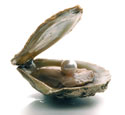
An oyster lies on her ocean bed,
Water wafted, filter fed,
But among the welcome plankton guests
She a nasty grain of grit ingests.
It ventures in her marble hall
To find no welcome mat at all.
The oyster attempts to eliminate
All seeds of discord from her plate.
She cloaks with beauty the sharp and cruel,
Transforms the meanest grit to jewel.
There’s nothing quite like oyster spit
To polish up a piece of grit.
From that very first sown spark
A star grows shyly in the dark,
And through incremental change will
Assume the radiance of an angel.
And for those of heavenly belief,
The grain of suffering, the grit of grief,
Not ours by just cause or intent,
We can learn at least to circumvent.
Grief with remembrance appease,
The suffering with compassion ease,
The hurt with forgiveness meet
All bitterness convert to sweet.
And when from life’s long night you burst
Into bright heaven whereof you thirst,
Your soul sloughed of sin and vice
Will be a pearl of greatest price.
The Eel
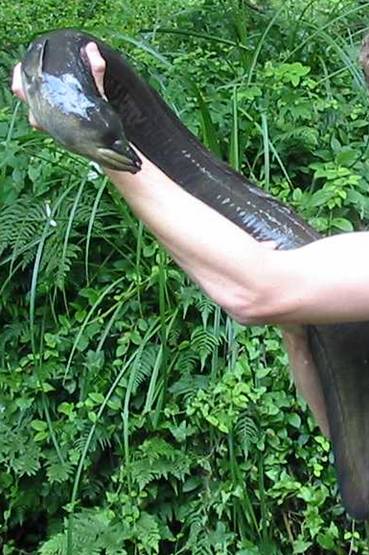
There is a creek in Coromandel
that descends from kauri forest
in giant steps and terraces,
self-made dams and water-races
between the overhanging ferns and nikau-palms.
Bright and friendly the fantails
nod and bow in confidence
of an ancient truce with man
Into one deep shaded pool
overhung by a fretted ceiling of silver punga
we throw an offering of food,
and from the depths in silver majesty
from her dark alien underworld
comes swimming up a monster eel,
unacquainted with men
and innocent of fear.
She takes our food,
grateful for the manna from heaven,
the gift of the gods,
and swims around for more,
brushing against our hands
as half in awe we feel her flanks.
We had greeted her as a guest,
offered her hospitality,
feasted her in honour and let her go.
But no, we baited a cruel barbed hook
and heavy nylon line and cast it in.
She took the bait in trust, pulled away
and felt the awful surge of pain,
the agony of betrayal.
We hauled her thrashing on the rocks,
and saw in her old eyes
the reflection of our own guilt.
We grabbed a rock and tried in vain
to bash the life out of that accusing head.
But eels do not allow you the luxury of a clean kill.
Our rock slipped off her slime and muscle.
Though bruised and battered she broke our line
and slithered half-blind and numb into the water
and sank to the deepest recesses of her pool
and did not surface again
although we depth-charged her pool with huge rocks.
We were quiet as we trudged home
and heard the fantails sing
of their ancient truce with man.
A Pearl Before Swine
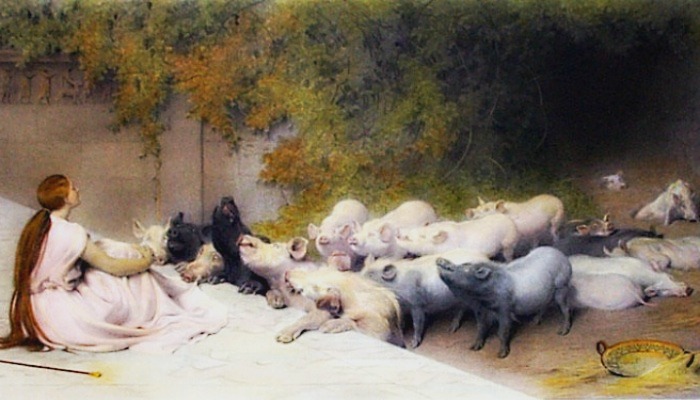
I am cast before swine.
They nose me with their snouts
And spit me out unpalatable.
And these are pigs that crack
The kernels of plum stones
They defecated weeks before.
But me they find nauseous.
The sweat of wisdom from my brow
More loathsome than cobra spit.
My passion and my poetry
Are trampled into the swill.
I am turned upon and rent,
Disemboweled, by tushes gored,
Worse disregarded and ignored.
This raucous sounder of sows,
The crackling of the belly pork,
The hogsnort contempt of utter boars.
I do not have Circe’s wand.
I cannot liberate their minds
Nor give them back humanity.
The Paua and the Glory
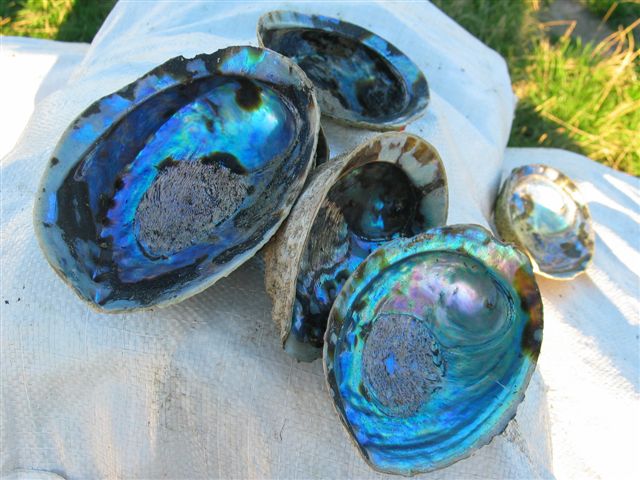
Pavo is Latin for peafowl.
Paua Maori for abalone.
A weird coincidence
Of mutual iridescence,
For both display bright hues
Of halcyon, magenta, cobalt,
Lapis lazuli, turquoise
And aqua marine.
For the regal peacock
That mesmerizes each pale female
With the glory of his shimmering tail,
It is a calculated risk
To flaunt his genetic prowess
Like a banner on the field of Mars.
He who bears the royal standard,
Holds aloft the colours of the regiment,
Will be targeted by snipers,
Will be clawed down by tigers.
The paua risks no such fate,
For hers is a harem beauty,
Not for lascivious gaze,
No naked nacre to amaze,
Not for public sale or spectacle.
Her silken thigh skin of the seraglio
Is hidden by heavy veils of shell.
The paua keeps purdah in her modesty,
Her shell crusted like gorgonzola,
Moss, tweed, camouflage coated.
She hides under rocks, in crevices.
Though the tides and waves of chance
Would wash her to oblivion,
She clings with grim determination
With her foot of grimy burqa black.
Why then such extravagance
On the hidden under surface of her shell?
Why this iridescent, shimmering, opalescent,
Shot silk, tui feathered, tiki eyed,
Kaleidoscopic, indescribable,
Beautiful for beauty’s sake alone? - Glory.
Jellyfish on a Marlborough Beach
We are in a luxury holiday lodge
In a turquoise Marlborough Sound,
Far from our native haunts,
All our needs supplied, all found.
Our sojourn, a surprise Christmas gift,
In a sumptuous, richly furnished home,
Both elegant and opulent,
But far from our normal comfort zone.
We fear they might see through us
To the poor naivety
Of our washed up lives.
We polish the rough pebbles
of our vernacular.
We dissemble to avoid the knives.
We stroll along the rocky shore
Before the cocktails and the canapés
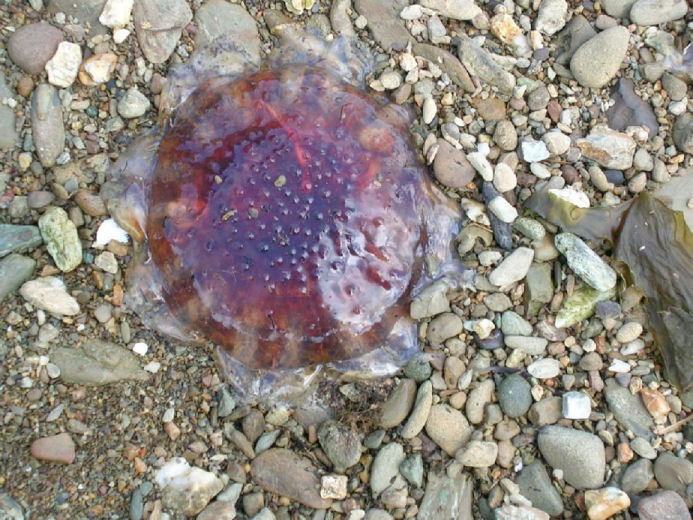
And see the stranded jellyfish
Cast up on the sharp and stony beach,
Far from their normal nautical niche.
Driven over the precipice of a wave
Like a flock of transparent sheep,
They crash into an alien element
In a beautiful boneless heap,
But unashamed as life force leaves,
They wear purple hearts on glassy sleeves.
Our Lady’s Bird
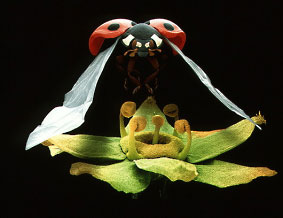
The stranger comes in to land out of an empty sky,Sycamore-key spinning down onto the sill.The seven-spot beetle, our Lady’s bird,Sheathes her wings and preens her feelersTesting the air for me the other stranger there.The sheen of her wing-wall baffles the light.The iridescence and the metallic luster wink and flash,Modern, hard, and brassy brash.The smoothly colour-streamed, airflow contoursOf her external shell ,the chitinous armourHide the primitive other-world of the segmented grub.She swaggers garish-bright and neon-lit,Accosts me and raises the hem of her outer shell.The approach, the raised wing-cases,The trust of laying bare the flimsy, gauze-likeAngelic wings, the frail diaphanous soul.I see also the black warty abdomen,The cruelly jointed legs, and gnashing, gnawing mandibles.And then the unrippling, the flexing, the billowing outOf the silken wings – the ascensionOf the virgin back into the empty sky.
The Scorpion
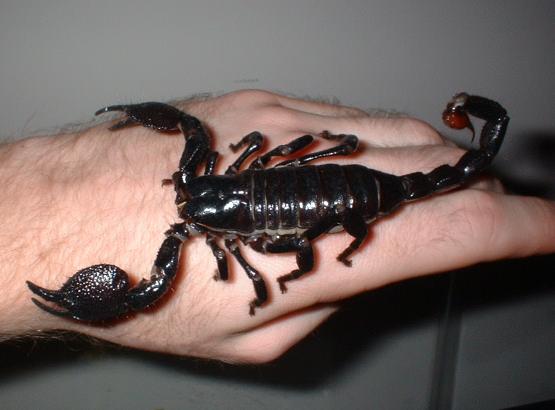
The scorpion scuttles under rocks nocturnal.
Shy it hides and shies away from light.
It has a sting deterrent so seeks no fight.
The scorpion mother guards her brood.
Under stones and shadow sting no safer place
Than upon the bosom of her carapace.
In the mind of man instinctive fear
Insidiously envenoms his brain,
Primed to avoid potential pain.
The scorpion’s sting like a comma
Punctuates the air, a poisoned chalice
That exudes a drop of dreadful malice.
The man disturbs the rock and hurtful sun
Reveals the mother and assaults her eyes.
In her desperate defensive pose and guise
She pivots Davidwise against Goliath,
With claws imploring, tail in arch,
The sacrifice of the matriarch.
The jackboot reduces her to juices
With no mercy sought or quarter
In thoughtless genocidal slaughter.
Night Fishing
(After Zha Shenxing)舟夜书所见
查慎行
月黑见渔灯,孤光一点萤。
微微风簇浪,散作满河星。
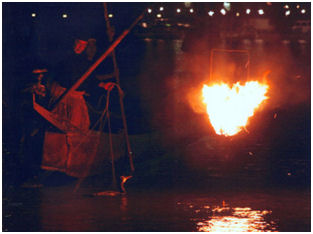
One boat bobs on the flat black sea.
One lantern gleams in the moonless night
To lure the silver squid up from the deep.
A breeze breaks the craquelure
Of the jet black japanned sea
Into countless mercury mirrored waves.
In each we see reflected
The single firefly lantern glow,
Multiplied a million fold
Into a galaxy of tiny stars.
Buterflies on Buddleia
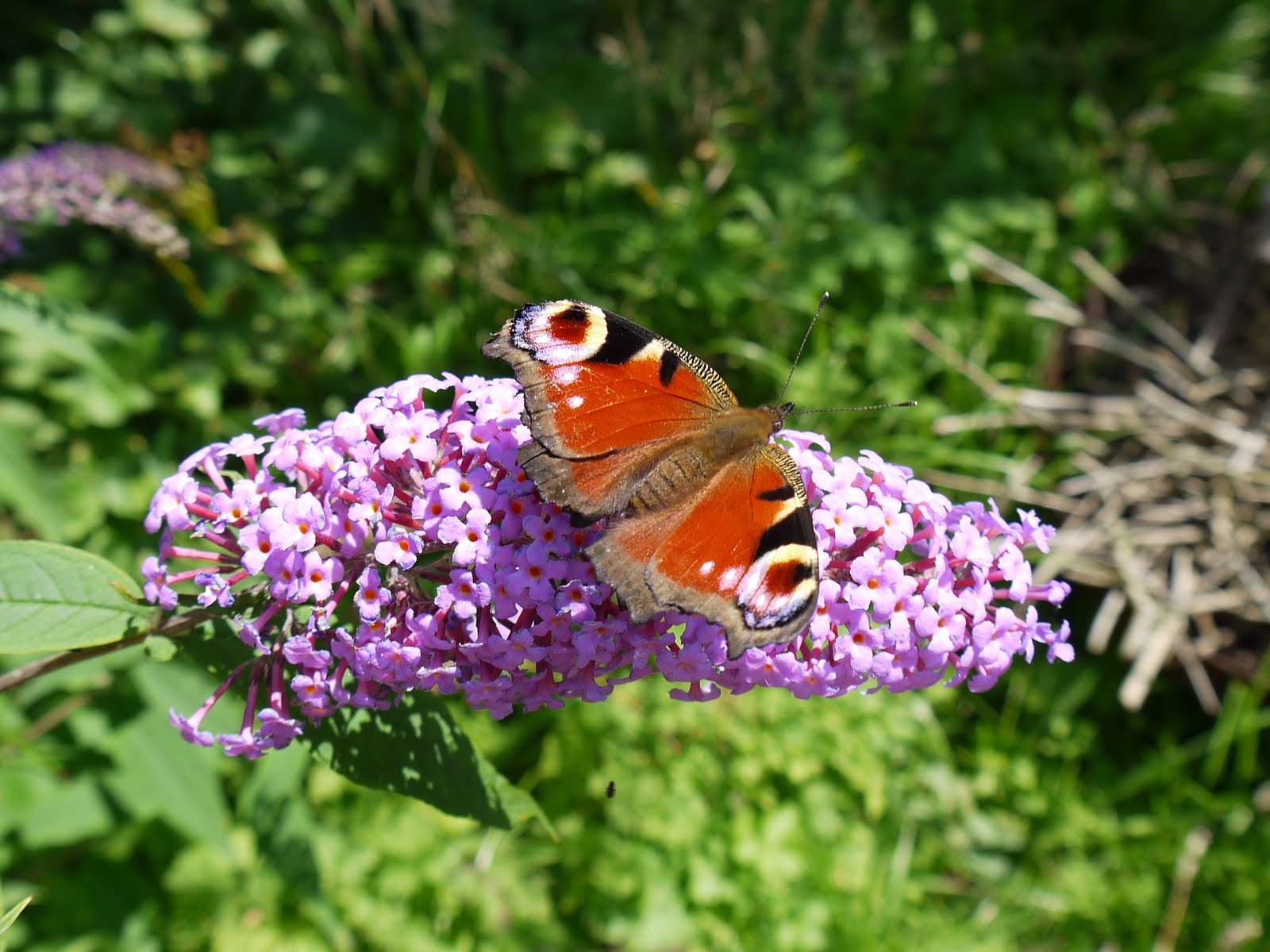
Paint a Chinese poem
in horse-mane tossing,
dragon-kite flying,
seagull gliding strokes
on a scroll of raw silk,
and it is a thing of beauty.
Compose a Chinese poem
in tonal symmetry,
wit-soul brevity
and most sense read between lines,
precious and few,
and it is a work of art.
Declaim a Chinese poem
from a high tower on the Great Wall
to a thousand frontier guards,
who dream of their mistresses
in Nanking and Shanghai,
and it plucks a thousand strings.
Translate a Chinese poem
and print it in Roman characters,
bleed its calligraphy,
expose bare bones of platitude.
The buddleia has lost its scent;
the butterflies are dead.
Page 15