OCCASIONAL POETRY
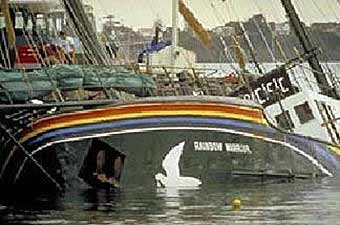
Sometimes one gets asks to write a poem for a special occasion, some staff member leaving, a theme night at the Poets' Society, a topical event - the tasks of a poet laureat without of course the laurels.
http://en.wikipedia.org/wiki/Sinking_of_the_Rainbow_Warrior
It was RED in the morning, sailor’s warning
As the frogmen slipped into the sea.
Like a clockwork ORANGE the limpet mines
Ticked away off the dockside quay,
Until a YELLOW flame gave away the game
And the warrior was brought to her knee.
The GREEN peace was shattered; the ripples spread
Far beyond New Zealand’s shore
To rock the ship of state in France
And “sacred BLUE!” the president swore.
So into the jailhouse, INDIGO;
Don’t collect your francs and don’t pass go.
Violent men meet VIOLET ends.
There’s no crock of gold at the rainbow’s end.
In the following poems at the Hawkes Bay Live Poets' Society we were given a line from a well-known poem as a starter.
We’re Poor Little Lambs Who’ve Lost Our Way. (Kipling)
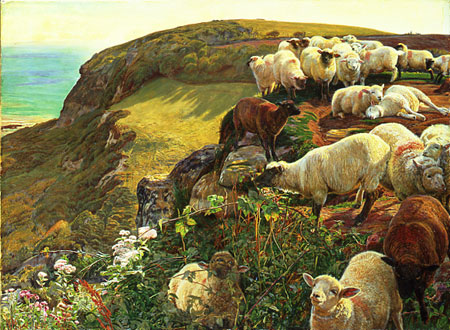
We’re poor little lambs who’ve lost our way.
Bleat the orphans on the rubber teats.
We’re poor little lambs who’ve lost our way.
Among my lettuces and silverbeets.
We’re poor little lambs who’ve lost our way.
As they follow you as full grown rams.
We’re poor little lambs who’ve lost our way.
And hump you as prospective dams.
We’re poor little lambs who’ve lost our way.
On the back of the ute saying au revoir.
We’re poor little lambs who’ve lost our way.
On the gangplank at the abattoir.
Then there were the bedroom floorboards. (Pam Ayres)
The Copper Kettle :: View topic - Where's there's a will...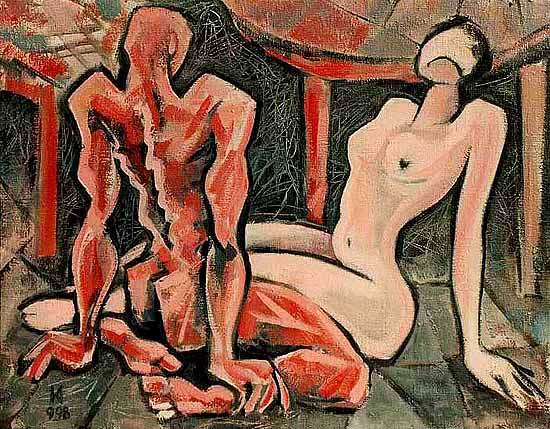
Then there were the bedroom floorboards,
Matai, tongued and grooved, tight as a virgin,
Sanded smooth to sit on bare cheeked and supple
In tantric lovemaking, oiled and waxed
With patchouli and sandalwood and warm musk.
Fine grain running from toe to groin,
Breast contour lines of heartwood,
Stradivarius woman shapes.
Those floorboards left a deep impression on me.
Who Will Believe My Verse In Time To Come? (Shakespeare)
http://www.william-shakespeare.info/william-shakespeare-sonnet-17.htm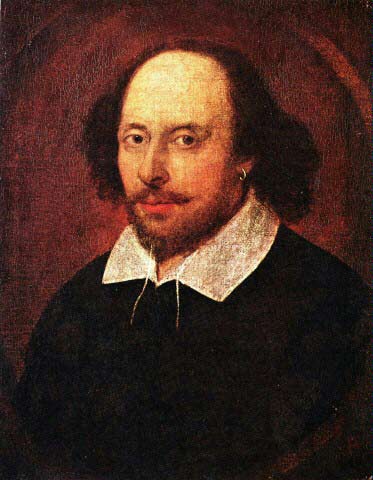
Who will believe my verse in time to come
When time has garbled the common tongue?
Who is there in your fair realm among
Us now to read the runes of Babylon?
I speak little Latin and less of Greek
And of Hebrew and Aramaic none.
Yet who would willingly forget the Son
Of God and the tongues that he did speak.
Yet in the forward abyss of time
Some jealous heart will feel Othello’s rage;
A Lear will show the folly of that age;
Hamlet’s passion will with their humour chime.
And each fair maid and noble youth will know
The love of Juliet for her Romeo.
A Noble Wreck In Ruinous Perfection. (Byron)
http://www.english.upenn.edu/Projects/knarf/Byron/manfred3.html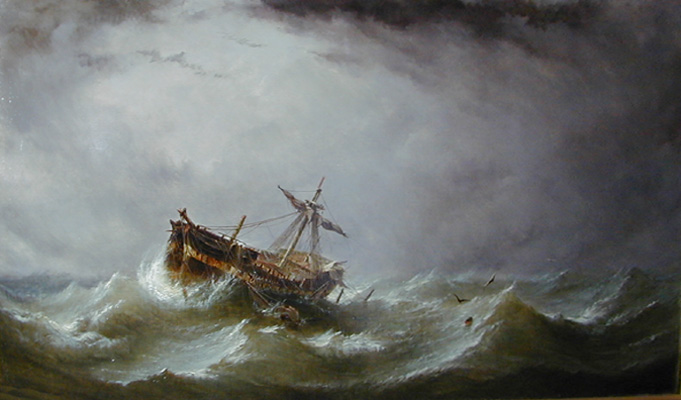
On the seabed of my mind
Lie scattered sundry artifacts.
The full hipped amphorae
Of sharp red wine from Macedon
And unctuous olive oil of Crete,
My venal veritas and massage in a bottle.
Beneath my Sargasso weed
Of piratical philandering
Are jewels from the rape of Peru,
Guilt ornaments from Indian maids,
Drowned now in my deep Azores
Or stranded on amnesia’s shores.
There is the anchor of my first true love
That held me secure in the storm
And emotional maelstrom of my youth.
Rusted and barnacle encrusted
One fluke embedded in the past,
One fang still in me at the last.
People might now look at me and see
A noble wreck in ruinous perfection.
They see not the shipworm and the canker,
My rudderless life and lack of anchor,
My lack of compass and direction.
And the night shall be filled with music (Longfellow)
http://www.bartleby.com/102/65.html
Come to me when the Bedouin and the Tuareg
Bind their faces with indigo scarves,
Against the parching sun and sharp sand,
And an oasis will mirage among the palms
And sandgrouse fill their feathers with water.
Come to me when the Inuit and Esquimaux
Chew sealskin ropes for sustenance
And the grandmother steps out into the snow,
And the white whale will breach and beach itself
Under a rainbow curtain of Northern Lights.
Come to me when dark despair seizes me
When I, with greater deafness than Beethoven
Cannot even hear Eroica with my mind’s ear,
And the night shall be filled with music
And you will be a melody for my soul.
When Tom and Elizabeth took the farm (Glover)
PSSM Conference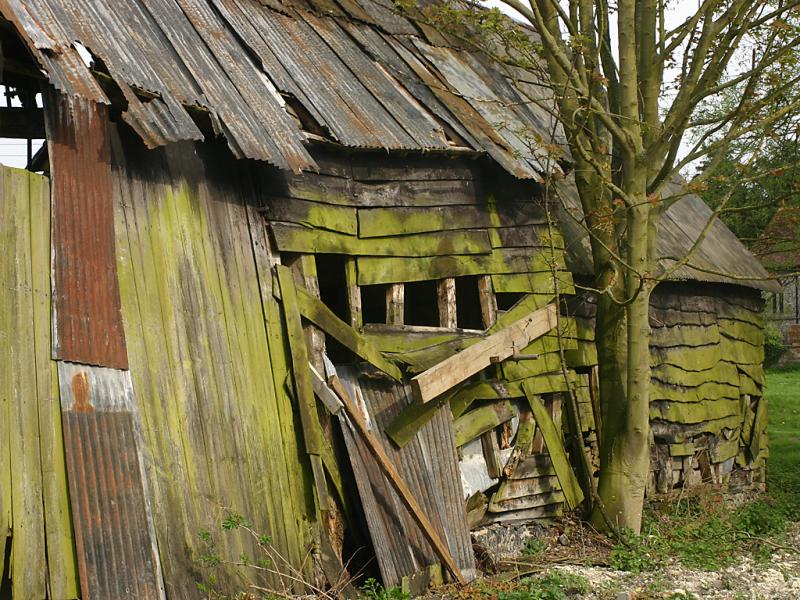
When Tom and Elizabeth took the farm
It was in ecological alarm.
The treeless hillsides crept towards the creek.
Scars of red clay scoured the slopes
Deforested, bare and bleak.
The totara that once grew strong and tall
Were split as fence posts for the farm.
These fences they saw sag and fall,
Hang in thin air above the slips,
Or slide downhill with the slumps.
The posts were lichen covered,
Rotten to the core with broken stumps.
By the woolshed were the broken yards
And the ugly macrocarpa tree beyond.
The sheep dip race leaked D.D.T.
Downhill to the creek and pond
Killing the koura and the eels.
In the pond the liver fluked ewe
With sodden fleece lay drowned,
A foul Ophelia in the duckweed lay.
In the gullies second growth bush survived
Blighted by misdirected thistle spray.
All seedlings nibbled by possums, hares and rats.
All fledglings killed by magpies, ferrets and cats.
When Tom and Elizabeth took the farm,
They made a start to mend the harm.
They felled the macrocarpa and gums,
Trapped the ferrets and the possums,
Poisoned the hares and the rats
And shot the magpies and the cats.
The following poem was written to illustrate poetical devices when teaching junior poetry.
The Lord of the Flies
Lord Of The Flies 07 - YouTube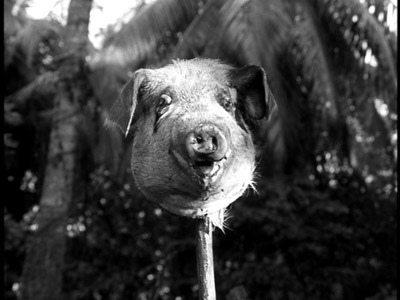
The stake was stripped of bark and naked.
Each end a dangerous dagger of wood
Slimy with sap and treeblood.
They cut the pig’s throat
And a geyser of blood fountained,
Then the warm red mudpool gurgled
And the paint on the picture dried.
They slit the pig’s belly
And the warm green snakes
Jostling and pushing in a crowd
Came sloshing out
In a vivid heap of guts.
They cut free the head
And impaled it on the stake.
The sun beat down on the head
And the stench awoke and looked around,
Hitchhiked a lift on the breeze
And called to the flies.
And the flies came.
The green jeweled bullets came.
The small squidgy midges came.
The hairy Iroquois helicopters came.
And all the subjects of his fly kingdom,
Came to vow fealty
To the Lord of the Flies.
The next poem was written more or less while I, together with several hundred bridge players, was waiting for the annual New Zealand Teams competition to start at the National Congress in Hamilton.
Ode To The New Zealand Teams
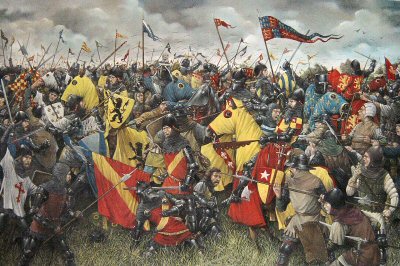
A herald sounds the clarion call to bridge,
Rebounds from ledge and parapet and lofty hall
Even to the lowest cot and meanest stall.
All are summoned, must muster, come and
Gather in a motley throng, middle-aged and young
And old, and all as the bell, do as they are told.
Gay pennants in the morning breeze unfurl
To flutter hearts of noble youth and girl,
Of village lass and peasant churl.
The shriven host has penance paid.
Each knight his emblem has displayed -
The trefoil of the trinity
And diamonds for eternity.
Rich damask marks the field of cloth of green.
Cascades and peacock fans of cards are seen.
All parley ends, all bets are in.
My sovereign liege, my lords and ladies,
Let the jousts begin.
Endorphin high we soar in plot and ploy,
In canticles of praise and paeans of joy
To play this game of commoners and kings.
Miraculously, we turn mere cards
Into a heady wine by yeast and zest,
By squeeze and coup, by East and West.
At this moment, Robin could come from wood,
Wilhelm Tell could cast an arrow spell
And any churl or thrall could draw from stone
Excalibur and all our sins of play atone.
But then despondent, leaden low we plunge
As all our golden dreams turn to dust
And all our shining armour lies in rust
For in all such tourneys only knights prevail
And exercise all droigt du seigneur
Casting but alms to the halt and poor
Who scrabble for the bones on the castle floor.
Once were Dragons
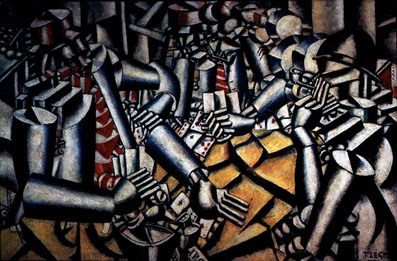
In the primaeval mists of time,
When we were a trifle younger,
Well actually quite a lot,
The bridge world was our Avalon,
Its club our Camelot.
Knights jousted here and dragonkind
And some less kind than others.
The word virago springs to mind
And termagant and shrewish.
The knights though were gentle men
Though some were plainly Jewish.
Emblems on their ties they wore;
Crests their double-breasted blazers bore.
The dragons sat on hoards of gold
Like languorous lizardly Lorelei.
They pointed painted fingernails
And gave us the evil eye.
Basilisk like with baleful glare.
In war and bridge all ploys are fair.
These were players of consummate skill,
Grandmasters and their mistresses.
And we were baby bunny kill,
Mere acolytes and novices.
These knights of the table square
Were no Galahad pure and fair,
But more in the line of Lance-a-lot
Creating an escutcheon blot
In sinister congress bars.
And rumour too is bruited abroad
That the dragons too had pterosaured
Aloft in motel mating flights
On tournament overnights.
At last at dusk the knights closed in;
In due time their bright swords rusted.
One knave, the jack, died of heart attack.
Another, pale eyed bald old man,
A champion too of chequered board,
At 94 just called it a draw
And laid his king at heaven’s door.
A third, a World War 2 Spitfire ace
Met his Red Baron in the sky one day.
When no plane limped home to Biggin Hill
His messmates silent stood and still.
Each fanned his cards intent and solemn
To see the hand that fate had dealt them.
When Solomon and Sheba passed away
There was wailing at the temple wall.
Their loss the most grievous of them all.
Some dragons of constitution stronger
In this drear world lingered longer.
A whole weyr succumbed to cancer.
A well-stacked deck or complete bust,
This acid rain fell on them unjust
The same to foil their well bid game.
And once again we silent stood,
Redoubled in the tulgey wood.
Maids once saved by vorpal blades
Fell victim to the sexton’s spades.
And we, the squires and prentices
Are called to fill their tenaces.
The pechvogel sits now on our shoulder
Kibitzing as we all grow older.
And this poem was written as I supervised an English examination.
Race

What if I were to die tomorrow
To leave a widow and orphan son?
Theirs the bursting heart and sorrow
When my hundred metre sprint is run.
Life is not mine to take but borrow
And when my mortal span is done,
I shall leave an orphan son and widow
And never win my Marathon.
Then I must simply pass the baton,
Pass on the spindle D.N.A.
And falter though each member must,
The team survives and runs relay.
And though I die and turn to dust,
The clan, the stock, the race goes on.
The following poem was written to accompany a mug that was presented to a departing staff member.
Odyssey of the Cup
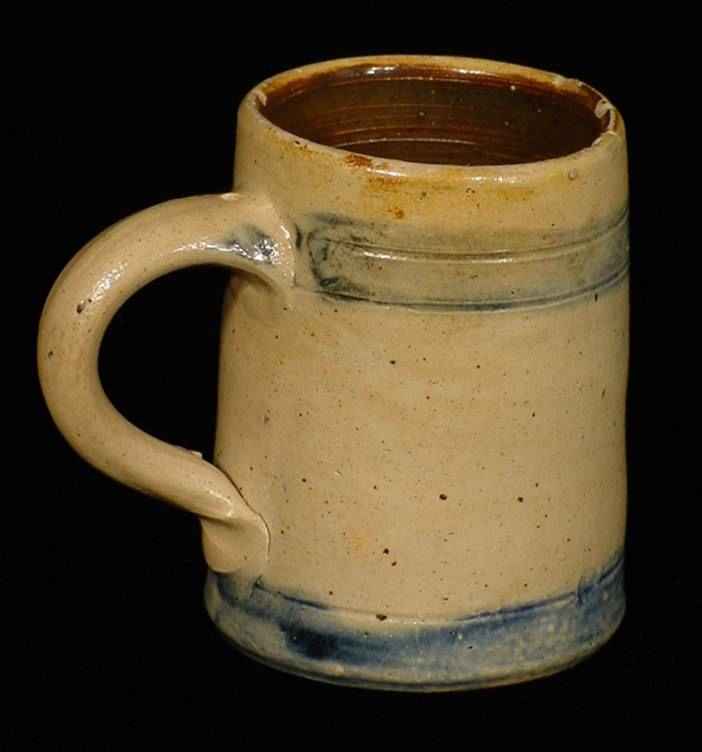
Mere man evolved by happenstance,
From some happy quirk of circumstance,
But I was created from primeval clay
In the grand old fashioned bible way.
Earth coiled upwards in the potter’s hands
And softly swelled in centric bands.
Glazed with design and baked in furnace,
I am fired with my creator’s purpose.
I am a vessel of the mind of God.
I hold spirits. I am within every man’s grasp.
I am the sought grail, the open door, ajar.
At Ragnarrok I was the crock, brimful of ale,
Quaffed to quench a berserk thirst
Of warrior bard in wild wassail.
At Calvary I was proffered up,
With wormwood, gall and eager wort.
I was the bitter cup.
Within me were wonders wrought,
Water to wine and wine to blood.
At Elsinore I was the vengeful chalice,
The poisoned cup of spite and malice.
Pearls effervesced in hemlock draught.
I have also caroused in Heidelberg
Raised heavenwards in Bruderschaft.
I am the cup that cheers, auld lang syne.
I am the cup that runneth over
With warm love and summer wine.
I am ceramic and ceremony,
The reconciliation of tea.
Heed not the unrequited love.
Forget the bright hues of youth,
Blighted hopes and twisted truth,
Compromise, and thwarted dreams.
Death is inevitable it seems.
So have a cup of tea my love
And all will be well.
I am the grail you sought and found.
In me is lethe and oblivion.
No scent, no light, no touch, no sound.
The next poem is one of several I wrote for a school musical I called Tane Matua.
The First Tree
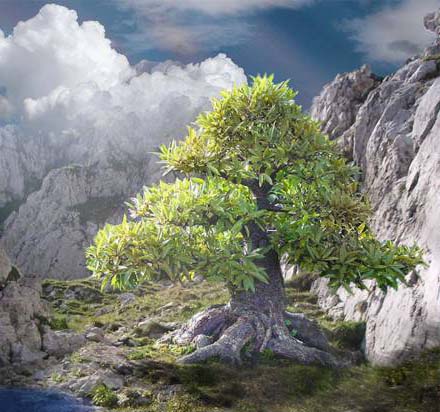
At dawning of creation day,
All in the world’s beginning,
The empty land quite barren lay.
No forest birds were singing.
A seed came floating from the sky,
A-falling down from heaven.
And there it lay for many a day
Until it started growing.
The tree grew strong in sun and rain
Until it cast a shadow.
And everywhere that shadow lay,
New trees were sure to follow.
The parent tree burst into bud
With radiant coloured petals.
From every flower there flew a bird
And in its branches settled.
The forest now was full of song
And overflowed with colour.
With sweetness filled from dusk to dawn.
No world could now be fuller.
To see the rest of the poems written for Tane Matua, click on this link:Tane Matua
Polling Day
The polling booth is the classroom
With jars of pollywogs, bright marigolds
And children’s paintings on the walls
In basic yellow, green, red and blue.
Through the wide-open, inviting door
Shines the unequivocal spring sun
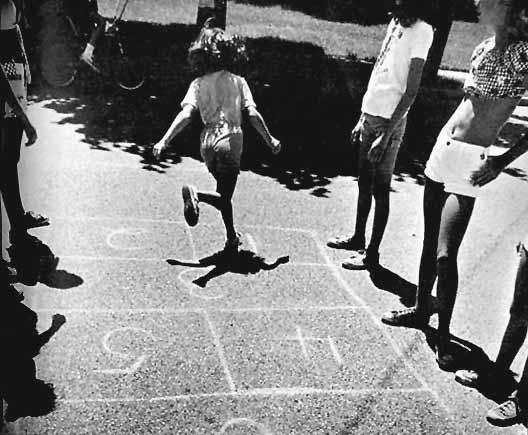
On the hopscotch squares of the school yard,
On the rubber tyre filled with concrete
That anchors the basketball standard
With the hoop way above the infants’ heads.
Frazzled mothers come to vote
With a baby saddled on one hip
And a grubby toddler firmly in tow.
Other parents with teenage kids
On their way to junior league.
These are good folks, salt of the earth,
Wanting the best of all possible worlds,
Health, wealth and happiness.
They sport the subtle totems of their clans,
The thin blue pinstriped shirt,
The organic green linen blouse,
The red tartan brushed-cotton.
But can you judge a voter by her dress?
One woman, tall, well heeled in pink,
Has life smiled on her like the spring sun?
Is her opinion set in concrete?
Will she endorse the status quo
Or will she vote for radical change?
I wear the red rosette of the left,
But this is farming, blue patch turf.
Will they look me in the eye
With quiet acknowledgment?
Or accost me with a glare
Of tribal confrontation?
Or will they quickly look aside
With tactful embarrassment?
The man in work-boots, plaid shirt and jeans,
Is he first a member of the working class
Or foremost a follower of the farming clan?
Tomorrow, it will no longer matter at all.
He will be once more my neighbour,
My workmate, my friend, good old Harry,
Setting the hoops higher for his children
As they play hopscotch in the lottery of life.
Moongazing
Sometimes translation is the stimulus for a poem.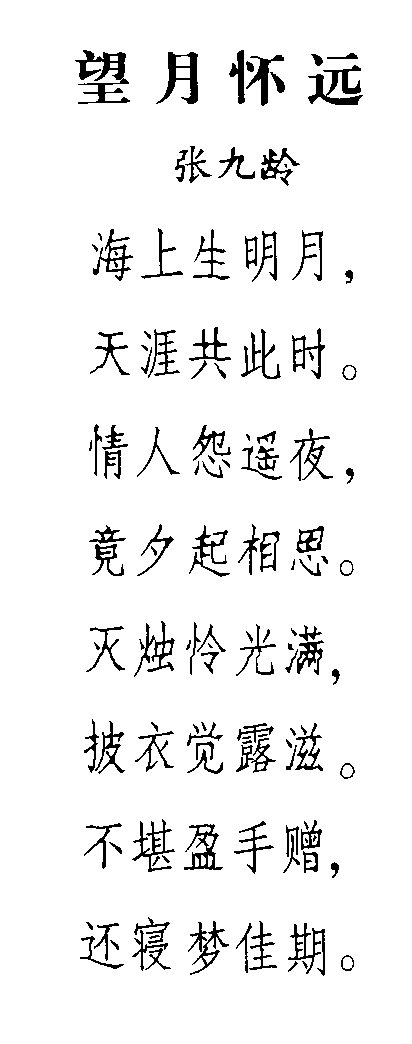
I seek cold comfort of the moon,
impassive witness in the sky above.
Perhaps you too will moongaze soon
to triangulate our distant love.
I snuff my candle to best behold
your image in reflected rays.
Though chilled with dew and evening cold,
I bask in memory of our gaze.
Next